

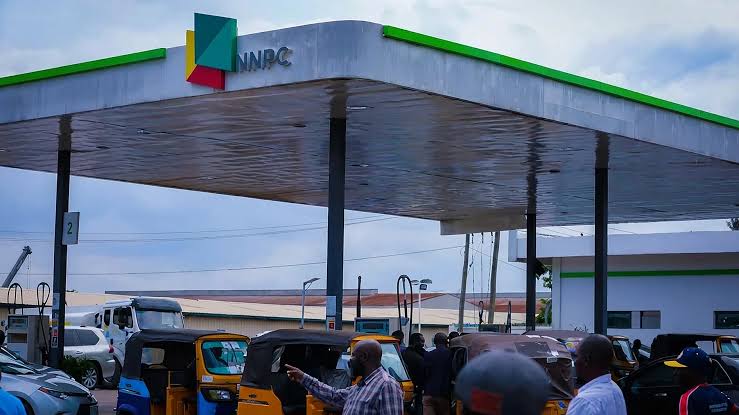
The Federal Government’s decision to introduce a 30-day petrol discount at Nigerian National Petroleum Company Limited (NNPC) filling stations has drawn criticism from labour leaders, opposition groups and economic stakeholders, who say the measure falls short of the relief Nigerians need.
The government announced the temporary intervention on Thursday, October 8, saying NNPC would sell petrol without its usual retail profit margin during the period. Public transport operators are expected to receive priority under the arrangement.
However, critics argue that the initiative offers limited relief to households already struggling with high transportation costs, food prices and other living expenses.
Labour Demands Petrol Below ₦1,000 Per Litre
The Nigeria Labour Congress (NLC) has rejected the proposed relief, demanding that petrol prices fall below ₦1,000 per litre to provide meaningful support for workers and ordinary Nigerians.
NLC Assistant General Secretary Chris Onyeka questioned the value of the intervention, arguing that a petrol price of ₦1,350 per litre would leave many households facing significant financial pressure.
The Association of Senior Civil Servants of Nigeria also expressed concern that the temporary discount would not adequately address the rising cost of living. Labour leaders called for more lasting measures, including improvements in domestic refining capacity.
Atiku, Obi Supporters and Makinde Campaign Group Criticise Move
Former Vice-President Atiku Abubakar rejected the initiative, questioning what would happen when the 30-day period expires. He argued that Nigerians need sustainable relief rather than a temporary reduction in fuel costs.
The Obidient Movement also questioned the timing of the announcement, suggesting that the approaching 2027 general election had influenced the government’s decision. This remains the movement’s political interpretation, not an established explanation for the policy.
Meanwhile, the presidential campaign organisation associated with Oyo State Governor Seyi Makinde criticised the measure as inadequate, arguing that the proposed reduction was too small compared with the increases Nigerians have experienced in petrol prices.
Economists Question Transparency and Coverage
Economic stakeholders have raised questions about how the discount will work in practice, including the amount saved per litre, the total cost to NNPC and the number of consumers likely to benefit.
One major concern is access. NNPC outlets represent only a small share of Nigeria’s filling stations, meaning motorists in areas without nearby NNPC stations may struggle to benefit directly.
Economists have also warned that cheaper petrol for commercial transport operators will not necessarily reduce fares unless there is a clear way to ensure the savings reach passengers.
Former Nigerian Bar Association president Olisa Agbakoba has proposed a different approach: using a price differential for crude supplied to domestic refineries to support lower petrol prices. He argued that a more structural solution could offer greater relief than a temporary discount.
The government, however, maintains that its intervention is not a return to the former blanket petrol subsidy. It says the measure is designed to provide temporary relief while limiting the impact of global oil-price movements on domestic consumers.
What Happens After 30 Days?
The central question is whether the temporary discount will translate into lower transport fares and reduced costs for households and businesses.
With labour issuing a separate two-week ultimatum over petrol prices and minimum-wage negotiations, the government faces growing pressure to demonstrate that its economic measures can deliver practical benefits to Nigerians.
Monafrika’s Take
The dispute highlights the difference between announcing economic relief and making that relief felt by ordinary people. A temporary discount may help some transport operators, but its wider impact will depend on the actual savings, access to participating filling stations and whether transport fares come down.
For Nigerians facing high living costs, the bigger test is whether the government can turn short-term relief into a lasting improvement in purchasing power.
0 COMMENTS
















Leave a Reply