

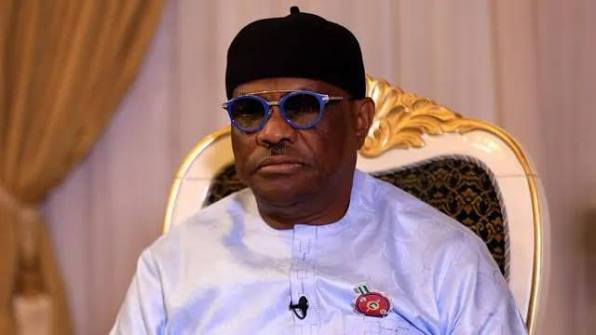
Federal Capital Territory Minister Nyesom Wike has given a fresh account of how the former G-5 governors approached the 2023 presidential election, saying their strategy was partly aimed at reducing the votes that the Peoples Democratic Party (PDP) candidate, Atiku Abubakar, could secure in the South-South.
Wike made the comments during a television interview, explaining that the group deliberately allowed the Labour Party candidate, Peter Obi, to gain ground in some South-South states where the PDP had traditionally been strong.
What Wike said
According to Wike, the G-5 governors believed that the bigger political concern was Atiku’s potential performance in the region.
He specifically mentioned Edo and Cross River, saying the strategy was to allow Obi to take votes rather than allow those votes to go to Atiku.
Wike said the situation was different in Rivers State, where he claimed the group did not want Obi to win because of the political implications they associated with such an outcome.
The G-5 consisted of Wike and four other PDP governors: Seyi Makinde, Samuel Ortom, Okezie Ikpeazu and Ifeanyi Ugwuanyi.
The governors had been involved in a major disagreement with the PDP leadership before the 2023 election. One of their major demands was for the resignation of then-PDP National Chairman Iyorchia Ayu and a change in the party’s power-sharing arrangement.
Did Wike’s strategy create Obi’s 2023 rise?
Wike’s latest comments add another part to the story, but they do not by themselves explain the whole of Obi’s 2023 performance.
Several factors were identified by election observers and researchers at the time.
1. Strong youth support
Obi attracted significant support among young Nigerians. The NDI/IRI final election report recorded a major increase in Labour Party support and membership after Obi became its presidential candidate, particularly among young people and voters in the South-East, South-South and South-West.
2. The impact of #EndSARS
Many young Nigerians who became politically active during the #EndSARS period later became involved in the 2023 political movement around Obi. Contemporary reporting and election research identified this connection as an important part of his support base.
3. Desire for an alternative to APC and PDP
The 2023 election was unusual because the Labour Party emerged as a serious challenger to the two traditionally dominant parties. Africa Check noted Obi’s appeal among younger voters and Nigerians who were tired of the established political parties.
4. Economic hardship
The 2023 campaign took place during a period of serious economic pressure, including rising living costs, unemployment concerns and the cash shortage created by the naira redesign. These issues became important parts of the public debate and contributed to dissatisfaction among many voters.
5. Social media mobilisation
Obi’s campaign became particularly strong on social media. Analysts noted that his support was especially visible among younger and more urban Nigerians, although social-media popularity could not automatically be equated with votes at polling units.
Wike’s new revelation
Wike’s account is significant because he is describing the political calculations of one of the most influential groups of PDP governors during the 2023 election.
It also gives fresh context to the unusual voting pattern in parts of the South-South.
However, Wike’s explanation should be treated as his account of the G-5’s strategy, rather than as proof that the strategy alone caused Obi’s performance. Other factors—including youth mobilisation, economic concerns, regional politics, the Labour Party’s growth and the #EndSARS generation—were also documented as important parts of the 2023 election story.
Monafrika’s Take
The 2023 election continues to generate debate because it changed the way many Nigerians looked at presidential politics.
Wike’s latest comments add an important political dimension: the opposition to Atiku within the PDP may have affected how votes were distributed in parts of the South-South.
But the wider story is bigger than the G-5.
Obi’s 2023 performance also reflected the emergence of a politically active generation of young Nigerians, the search for an alternative to the two major parties, economic frustration and a powerful social-media campaign.
The latest revelation therefore adds another piece to the 2023 election story, rather than providing a single explanation for it.
0 COMMENTS















Leave a Reply