

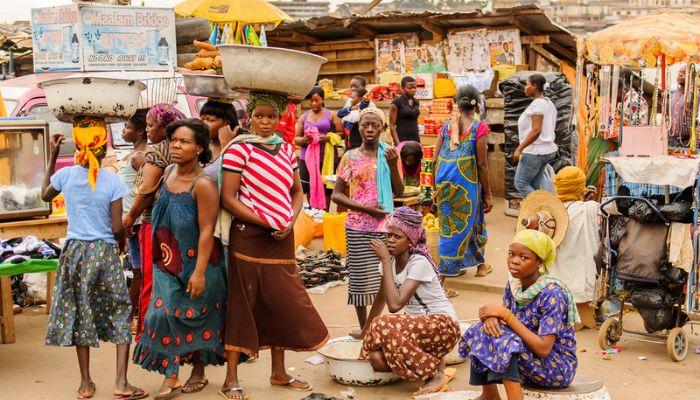
Nigeria’s economy is showing signs of recovery, but an important question remains:
Is economic growth translating into better lives for ordinary Nigerians?
The National Bureau of Statistics says Nigeria’s real GDP grew by 3.89% year-on-year in the first quarter of 2026, compared with 3.13% during the same period in 2025.
The non-oil sector remains the major engine of the economy. It contributed 96.08% of real GDP in Q1 2026.
Manufacturing also grew by 3.29%, while trade recorded 2.08% growth.
The latest official data also shows that Nigeria’s Q2 2026 GDP report has been released, giving policymakers and businesses a newer picture of the economy.
But economic growth is only one side of the story.
For millions of Nigerians, the real test is the cost of food, transportation, housing, electricity, and other basic needs.
So while the headline numbers may be improving, the bigger question is whether household incomes and purchasing power are improving at the same speed.
MONAFRIKA TAKE
Nigeria may be moving in the right direction on paper. But growth becomes meaningful only when ordinary families can actually feel the difference.
The economy cannot be declared healthy simply because GDP is growing. Nigerians must feel the recovery in their pockets.
0 COMMENTS














Leave a Reply