

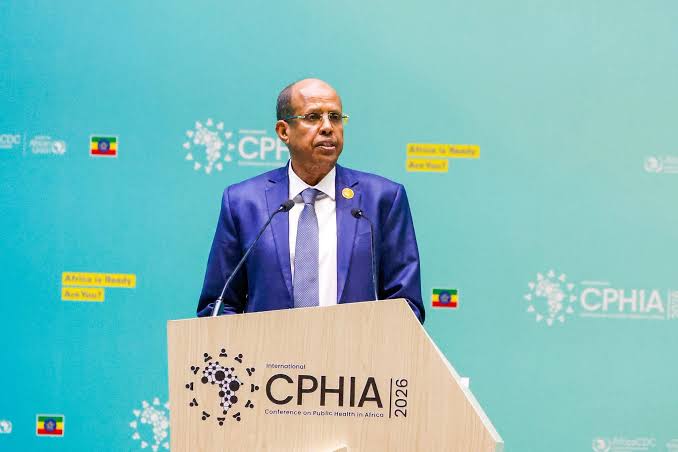
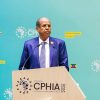
African political leaders, health ministers, scientists, policymakers, and public health institutions have gathered in Addis Ababa, Ethiopia, for the Fifth International Conference on Public Health in Africa, as the continent seeks to strengthen its health systems and reduce dependence on external financing.
The conference, known as CPHIA 2026, opened on Monday, November 23, and will run until November 27. It is co-hosted by the Africa Centres for Disease Control and Prevention (Africa CDC) and the Ethiopian Government.
Held under the theme Africa’s Health Security and Sovereignty: Transformation from Health Dependency and Vulnerability to Ownership and Resilience, the gathering is expected to bring together more than 30,000 participants, including government representatives, researchers, health professionals, innovators, development partners and civil society organisations.
The conference comes at a time when African countries are facing pressure from changing international health-financing arrangements, recurrent disease outbreaks, shortages of health workers and continued dependence on imported medicines, vaccines and diagnostic products.
Its central focus is how African governments can strengthen domestic health financing, improve public health institutions and build the capacity to respond to health emergencies without relying excessively on external assistance.
The opening programme included high-level discussions on leadership and financing for Africa’s health sovereignty, alongside the launch of the African Union Champions’ Roadmap on Reproductive, Maternal, Newborn, Child and Adolescent Health for 2026–2030.
On Tuesday, November 24, discussions are scheduled to focus on reforming the global health architecture, immunisation, pandemic preparedness and health financing.
The programme also includes the launch of the Continental Immunization Forum, the inaugural Continental AIDS Monitoring Report and discussions on the CPHIA Health Financing Pathway Compact.
Another major focus is Africa’s ambition to strengthen local vaccine manufacturing. The continent has set a target of producing 60 per cent of its vaccine needs locally by 2040, a goal that will require investment in research, manufacturing facilities, regulatory systems, supply chains and skilled personnel.
Further discussions during the week will address sustainable domestic financing, local pharmaceutical manufacturing, pooled procurement, primary healthcare, digital health, artificial intelligence, climate resilience and disease surveillance.
The conference is also expected to provide a platform for African countries to discuss stronger continental cooperation and the development of health institutions capable of responding to emergencies and reducing vulnerabilities in supply chains.
Monafrika Take
Africa’s health sovereignty will depend on more than declarations at international conferences. Governments must translate commitments into domestic financing, stronger primary healthcare, skilled health workers, local manufacturing, and reliable disease surveillance. The most important measure of CPHIA 2026 will be whether its discussions produce practical commitments that improve access to healthcare across the continent.
0 COMMENTS










Leave a Reply