

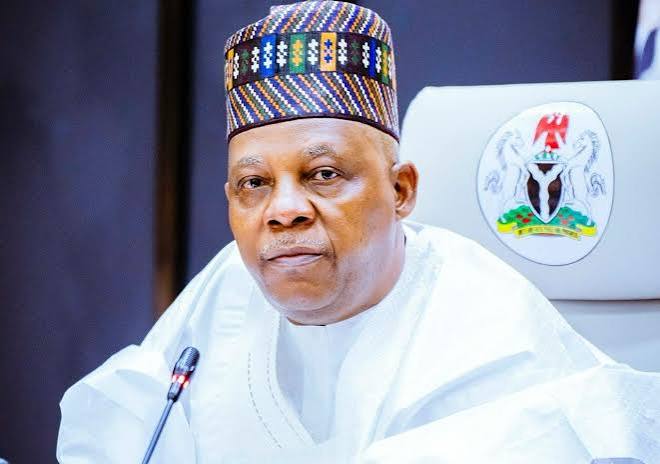
The Federal Government has launched a new five-year National Drug Control Master Plan covering 2026 to 2030, with Vice-President Kashim Shettima calling on government institutions, state authorities and other stakeholders to implement the strategy with urgency and accountability.
The plan was officially launched in Abuja on Monday, November 23, as the government seeks to strengthen its response to drug trafficking, substance abuse and the wider social and economic consequences of illicit drug markets.
Shettima, who spoke as Special Guest of Honour, said drug control should be treated not only as a law-enforcement responsibility but also as a public health, security, development and economic priority.
He urged federal ministries, departments and agencies, state and local governments, the National Assembly, private-sector organisations, traditional and religious institutions and international partners to participate in implementing the plan.
The new strategy is built around six pillars: supply reduction; drug demand reduction; access to controlled medicines for scientific and medical purposes; alternative development and sustainable livelihoods; disruption of the illicit drug economy; and governance, financing and coordination.
The framework is intended to combine action against trafficking networks with prevention, treatment, rehabilitation and efforts to reduce the economic incentives that sustain illicit drug production and distribution.
The Vice-President warned that a national plan without a credible financing pathway could become little more than a statement of intent. He called for its priorities to be reflected in institutional work plans, budget proposals and implementation schedules.
Chairman of the National Drug Law Enforcement Agency, Brigadier-General Mohamed Buba Marwa (retd.), said the new plan was informed by an evaluation of the previous 2021–2025 framework.
According to the agency, the previous plan recorded 77,736 arrests, the seizure of more than 14.8 million kilogrammes of drugs and over 14,200 convictions. More than 32,400 people also benefited from treatment, counselling and rehabilitation services.
The evaluation identified gaps in coordination, financing, service delivery, data collection, monitoring and accountability. It also highlighted weaknesses in the capacity of state and local institutions.
The new plan is expected to strengthen the response to emerging threats, including synthetic drugs, new psychoactive substances and trafficking networks that exploit encrypted communications and cryptocurrency.
The strategy also places emphasis on the financial systems supporting illicit drug markets, recognising that enforcement operations must be accompanied by efforts to disrupt the profits and assets generated by trafficking.
Monafrika Take
The launch establishes a broader national framework for addressing drug abuse and trafficking, but the real test will be implementation. Funding, treatment access, prevention programmes, coordination between federal and state authorities and measurable accountability will determine whether the plan produces lasting improvements.
0 COMMENTS















Leave a Reply