

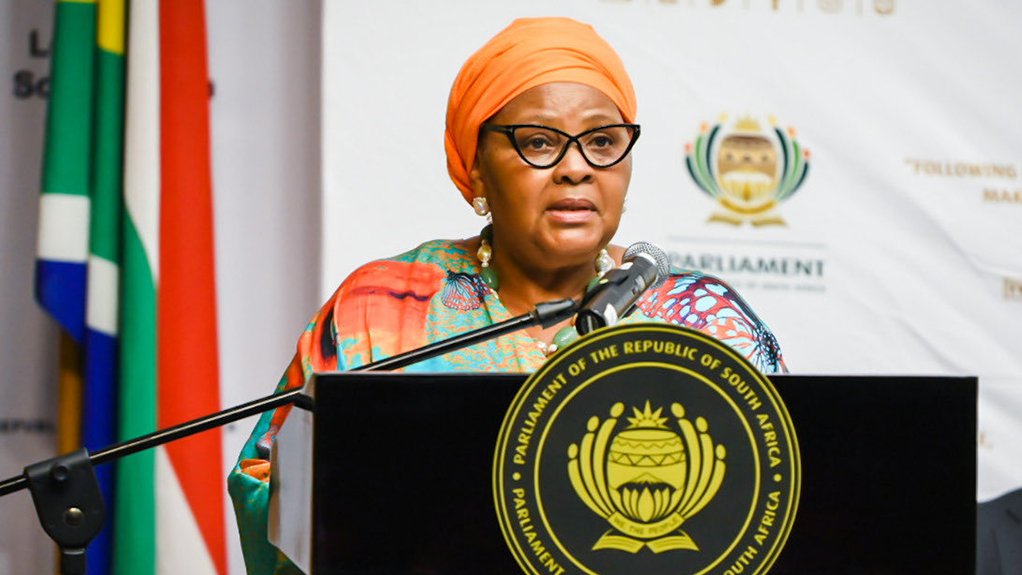
The corruption and money-laundering trial of former South African National Assembly Speaker Nosiviwe Mapisa-Nqakula has moved towards judgment following the conclusion of closing arguments by prosecutors and the defence at the Pretoria High Court.
The court heard final submissions from both sides on Monday, November 23, after a trial involving allegations that Mapisa-Nqakula solicited corrupt payments from a defence contractor while serving as South Africa’s Minister of Defence.
Prosecutors allege that Mapisa-Nqakula solicited approximately R4.5 million from defence contractor Nombasa Ntsondwa-Ndhlovu between 2016 and 2019. The state further alleges that she ultimately received about R2.2 million and used the money to renovate her home in Bruma.
The contractor, who became a state witness, testified that payments were made to the former minister. Her evidence formed a central part of the prosecution’s case.
During closing arguments, prosecutors maintained that the witness’s account was credible and supported by other testimony and evidence presented during the proceedings.
The defence challenged that position, arguing that the contractor’s evidence contained inconsistencies and questioning the reliability of the allegations. Mapisa-Nqakula has denied wrongdoing and contested the prosecution’s account.
The former speaker faces 12 counts of corruption and one count of money laundering, according to information provided by the investigating authorities.
The trial has attracted considerable attention because Mapisa-Nqakula previously occupied one of South Africa’s most senior parliamentary offices. She resigned as Speaker in 2024 after the allegations became the subject of criminal proceedings.
With the closing arguments concluded, the court is expected to consider the evidence and legal submissions before delivering judgment. The judgment is expected on December 3, 2026.
The case remains before the court, and the allegations have not yet been established through a final judicial determination.
Monafrika Take
The case demonstrates the importance of accountability for public officials, regardless of the positions they previously held. The court’s decision must rest on the evidence and applicable law, while the public has a legitimate interest in the transparent handling of corruption allegations involving senior officeholders.
0 COMMENTS



















Leave a Reply