

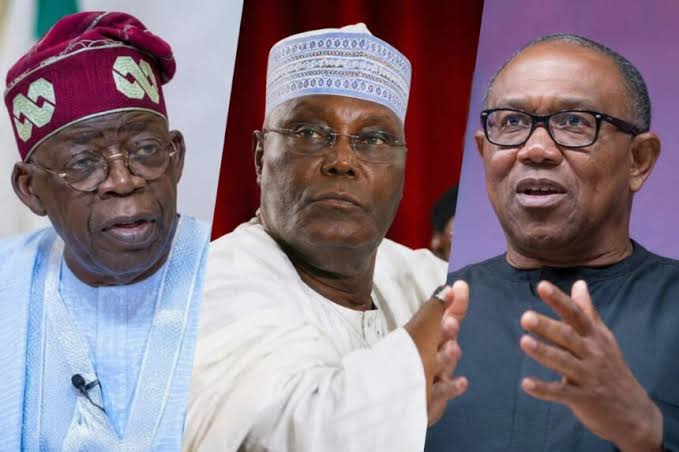
With about three months remaining before Nigeria’s 2027 presidential election, concerns are growing over the limited scale of major nationwide campaign rallies by leading presidential candidates, as political allies, governors and support groups take the lead in mobilising voters.
President Bola Ahmed Tinubu of the All Progressives Congress (APC) and former Vice President Atiku Abubakar of the African Democratic Congress (ADC) are among the major contenders whose campaign activities have attracted attention.
Although political consultations, endorsements and grassroots mobilisation are ongoing, the level of public campaigning appears less intense than the nationwide rallies that characterised the build-up to the 2023 presidential election.
Nigeria’s presidential and National Assembly elections are scheduled for January 16, 2027. The Independent National Electoral Commission (INEC) set August 19, 2026, as the commencement date for presidential campaigns.
Political Allies Take the Lead
Political figures and support groups have continued to organise meetings and mobilisation activities on behalf of their preferred candidates.
Within the APC, Vice President Kashim Shettima has engaged Northern political leaders and stakeholders to rally support for Tinubu’s second-term bid. Governors, former governors and other party figures are also working to strengthen the party’s grassroots structures.
The ruling party has rejected suggestions that its campaign preparations reflect a lack of readiness. It maintains that its activities are proceeding according to its timetable.
Opposition figures, meanwhile, face the challenge of coordinating their political structures, building alliances and communicating a common message to voters.
The level of coordination among opposition parties remains an important issue as the election approaches.
High Campaign Costs Raise Concerns
The cost of organising nationwide rallies has emerged as one possible reason for the limited scale of public campaign activities.
Transport, logistics, publicity, security and crowd mobilisation require substantial funding, particularly for parties seeking to reach voters across Nigeria’s 36 states and the Federal Capital Territory.
Insecurity in some parts of the country also presents challenges for political gatherings and nationwide travel.
Age-related public debate surrounding some leading contenders has featured in political discussions. However, campaign activity alone does not establish the reasons behind an individual candidate’s schedule.
Digital Campaigns Gain Attention
Political actors are also exploring digital platforms to reach voters, especially young people.
Peter Obi, the former Anambra State governor and presidential candidate of the Nigeria Democratic Congress (NDC), recently appeared on a TikTok Live programme, where he interacted with viewers and discussed his plans for national engagement.
Digital platforms offer candidates a way to communicate directly with audiences at a lower cost than large rallies. However, online attention does not necessarily translate into votes or demonstrate the level of support a candidate enjoys nationwide.
Questions Over Voter Engagement
The limited visibility of major campaign rallies has raised questions about how effectively candidates are communicating their plans to Nigerians.
Voters face important issues, including the cost of living, unemployment, insecurity, electricity supply and economic opportunities. Political observers will be watching how candidates address these concerns as their campaigns develop.
The coming weeks are expected to provide a clearer picture of the candidates’ campaign strategies, the strength of their political alliances and their efforts to engage voters across the country.
Monafrika’s Take
The 2027 election campaign is entering an important period. While political allies and support groups can help candidates build grassroots networks, Nigerians also need direct engagement with the presidential contenders.
Large rallies are not the only measure of a campaign’s strength. Clear policy proposals, public debates, accessible candidates and meaningful engagement with citizens are also important.
As election day approaches, voters deserve to hear directly from those seeking their mandate. They need clear answers on how candidates intend to address the country’s economic and security challenges.
Ultimately, the focus should be on policies, accountability and the issues that matter most to Nigerians, rather than political endorsements alone.
0 COMMENTS













Leave a Reply